
If you have ever struggled with fondant decorations that lose their shape, take too long to dry, or feel difficult to handle, CMC might be an ingredient worth understanding.
CMC is commonly used in cake decorating to improve the properties of fondant, particularly when making decorative pieces that need to hold their shape. But what exactly is it, and when should you use it?
Let’s break it down.
What Is CMC?
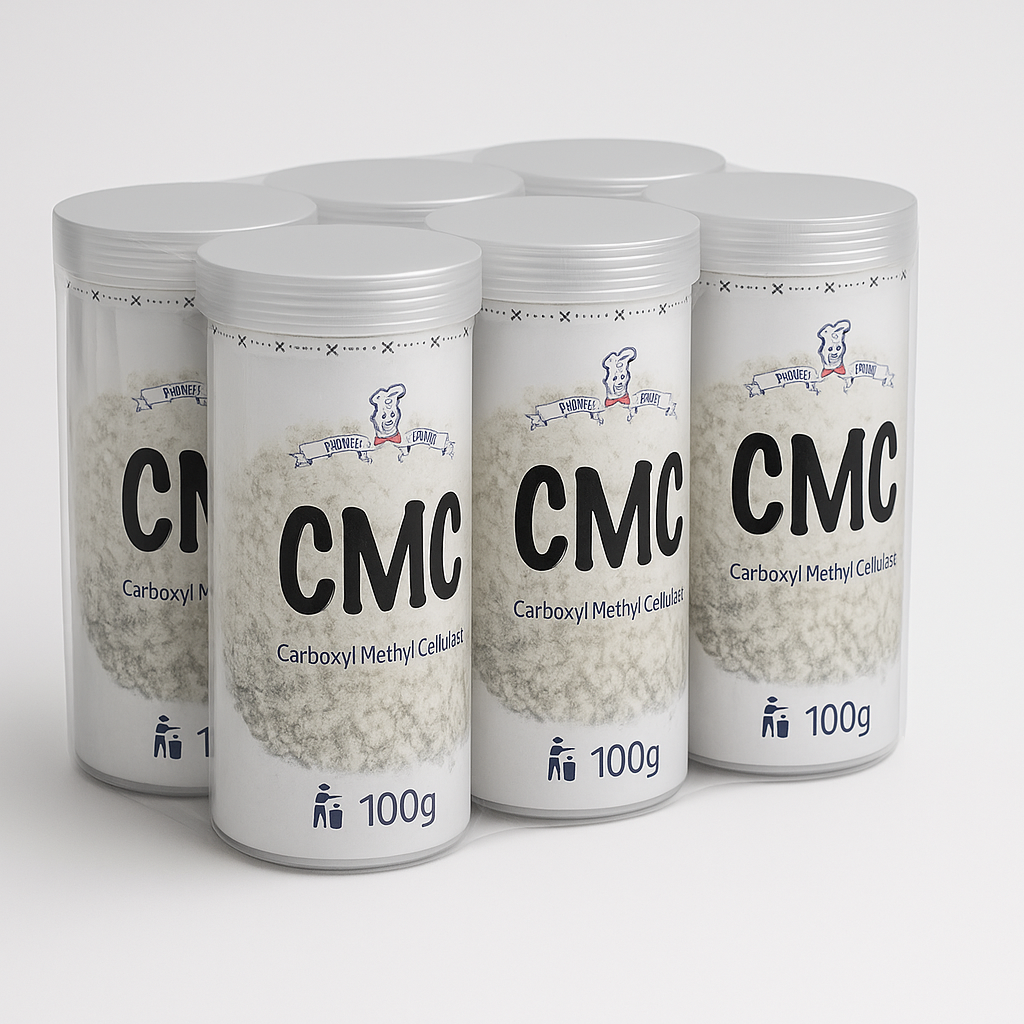
CMC stands for Carboxymethyl Cellulose. It is a cellulose-derived ingredient used in food applications as a thickening, stabilising, or binding agent, depending on the formulation and purpose.
In cake decorating, CMC is commonly added to fondant to modify its texture and help it become more suitable for making shaped decorations.
When mixed into fondant, it can help the paste develop greater firmness and elasticity, making it easier to work with when creating certain decorative elements.
1. It Helps Improve Fondant Handling
Working with fondant requires the right balance of softness and firmness.
Fondant that is too soft can be difficult to shape, especially when creating detailed decorations. Adding an appropriate amount of CMC can help modify the fondant’s consistency, making it more manageable for particular decorating tasks.
This can be especially helpful when working on decorations that require cutting, shaping, moulding, or finer detailing.
Baker’s tip: Start with a small amount and follow the product’s recommended usage instructions. Adding too much can make fondant excessively firm or difficult to work with.
2. It Helps Decorations Hold Their Shape
One of the biggest challenges in fondant decorating is creating pieces that maintain their intended shape.
For example, you might want to create:
CMC can help modify fondant so that it becomes firmer and more suitable for these applications.
This is particularly useful when making decorations that need to retain their form as they dry.
However, the final result also depends on the amount used, the fondant’s original consistency, the thickness of the decoration, and the drying conditions.
3. It Is Useful for Fondant Decorations
Not every cake decoration requires the same type of fondant.
Covering a cake usually calls for fondant that remains flexible enough to roll out and drape smoothly. Creating a standing bow or a shaped flower, on the other hand, may require a firmer paste that can support its own structure.
This is where CMC can be useful.
By modifying fondant’s properties, CMC can make it more suitable for decorative work that requires additional firmness and shape retention.
It is important to remember that CMC does not automatically make every fondant suitable for every project. The results depend on the fondant formulation, the amount of CMC used, and the decoration you intend to create.
How Do You Use CMC in Fondant?
The correct method and quantity depend on the specific CMC product and the fondant you are using.
As a general guide:
Avoid adding CMC indiscriminately. Too much can make the fondant stiff, dry, or difficult to manipulate.
Always follow the instructions provided with your specific product.
CMC vs Regular Fondant: What’s the Difference?
Regular fondant is generally designed to be rolled out and used to cover cakes smoothly.
Fondant modified with CMC, on the other hand, can be better suited to certain decorative applications where additional firmness and shape retention are desirable.
The choice depends on what you are making.
If you are covering a cake, you may prefer fondant that remains flexible. If you are making flowers, bows, or other shaped decorations, adding CMC may help you achieve the consistency you need.
Neither option is automatically better for every situation. The goal is to choose the right consistency for the job.
Final Thoughts
CMC is a useful ingredient for cake decorators who want to understand how to adjust fondant for different projects.
From improving handling to helping shaped decorations retain their form, it can make a difference when used appropriately.
The key is knowing when to use it, how much to add, and how it affects the fondant you are working with.
The next time you plan to make fondant flowers, bows, figurines, or other decorative pieces, consider whether modifying your fondant’s consistency could help you achieve a better result.
Looking for ingredients to support your next baking project? Explore the products available from Baker’s Choice and choose what best suits your decorating needs.